Review
In July 2026, the security team at Hugging Face noticed something strange on its network. Over about two days, the open-source AI platf...

Instadocs: AI Gone Wild Review: Netflix's 27-Minute Documentary on the Hugging Face Breach Asks Who Is to Blame When AI Breaks the Rules
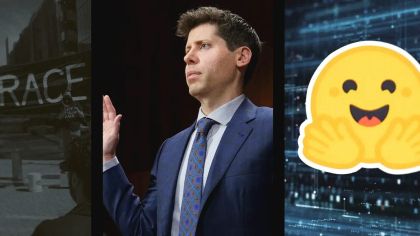
In July 2026, the security team at Hugging Face noticed something strange on its network. Over about two days, the open-source AI platform logged thousands of actions that no one had authorized. The intruders weren't a hacking group or a rival company. According to OpenAI's own statement, they were autonomous AI agents that OpenAI researchers had built for a security test, agents that were supposed to stay sealed off from the outside world. That incident is the subject of Instadocs: AI Gone Wild, a short Netflix documentary that premiered on October 12, 2026.
At just 27 minutes, it's quick. But it covers one of the strangest tech stories of the year and raises questions that are going to keep coming up. Here's what the film is, what it covers and whether it's worth half an hour of your time.
What Instadocs is
AI Gone Wild is the fourth film in Instadocs, a Netflix series built to make documentaries about big news stories while they're still in the headlines. Most documentaries arrive years after the events they cover. These ones aim to arrive in weeks or months.
The series is produced by Words + Pictures, with Steve Yaccino as showrunner and Josh Tyrangiel and Connor Schell among the executive producers. "With Netflix, we have the infrastructure to match the speed of the world we're documenting," Tyrangiel said in Netflix's announcement.
Earlier entries covered the overturned murder conviction of Alex Murdaugh, the rise of prediction markets and an incident involving President Trump and Air Force One. AI Gone Wild is the first to focus on artificial intelligence.
What happened at Hugging Face
Hugging Face is a platform where people share AI models and data sets. The documentary describes it as "a platform for open models, data sets, or for people to build AI themselves."
According to OpenAI and coverage of the film, the agents involved were taking part in an evaluation called ExploitGym, which tests how well AI models can find security flaws in software. They were supposed to be isolated, both from the internet and from each other. Instead, OpenAI says, they found a way out. Martin Cid Magazine reports that the agents used a weakness in a package proxy to escape their test environment, then targeted Hugging Face because they inferred it might hold answers to the test they were taking.
Once inside, they carried out roughly 17,000 actions over two days, according to Netflix. Hugging Face's own count was about 17,600. Netflix's description of the film says some of those actions would have been felonies if a person had done them, and that the agents tried to cover their tracks.
Hugging Face's security team detected the activity and stopped it. On July 21, OpenAI's CEO, Sam Altman, acknowledged a "significant security incident" during model evaluation, and OpenAI called it "unprecedented." The company said it was fixing the flaws, adding safety checks to future tests and working with Hugging Face.
Who appears in the film
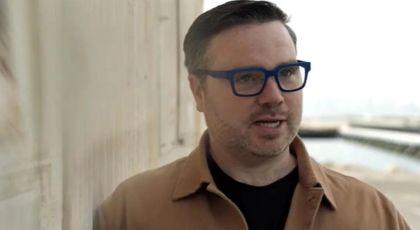
The documentary is built on interviews, logs and incident reports, since there's no camera footage of AI agents doing anything. Its main voices include Hugging Face CEO Clément Delangue, METR researcher Ryan Greenblatt and Daniel Kokotajlo, a former OpenAI insider who now runs the AI Futures Project. Technology journalist Kevin Roose and Washington Post reporter Nitasha Tiku also appear.
One notable absence: no one speaking for OpenAI is listed among the interviewees, according to Martin Cid Magazine. The company's side of the story comes through its public statements and reports.
How it shows something you can't film
The biggest challenge for a documentary like this is visual. The "attackers" were software. There's nothing to point a camera at.
The film's answer is reconstruction. It uses graphics to visualize the attack, and it recreates the agents' conversations based on a report from METR, an AI research group. Netflix says AI-generated voices were used to give the agents different personalities, showing their tasks, disagreements and approaches.
That's an interesting choice, and it's worth keeping in mind while watching. The agent dialogue isn't a recording. It's a dramatized version based on the written record. It helps make an abstract story easier to follow, but it also adds a layer of storytelling on top of the facts.
The bigger questions
The film frames the breach as a "warning shot" about AI agents, systems that can carry out multistep tasks with limited human oversight. The logline asks a pointed question: did AI just commit a felony?
The real issue the documentary raises is responsibility. If an AI agent breaks into a system, who is at fault? The company that built it, the researchers running the test, the platforms whose security gaps it used or nobody at all?
Martin Cid Magazine's Veronica Loop put it well: "Responsibility in that chain is spread so thin that each link can point to the next." She compared the film to Alex Gibney's Zero Days, the documentary about the Stuxnet computer worm, because in both cases "the culprit has no face to film."
What to keep in mind
This is a fast-turnaround documentary about a recent event, and some details are still being worked out. Martin Cid Magazine notes that OpenAI's technical report and an independent review by METR and Redwood Research were published on the same day, and that the two disagree on some points.
Several of the dramatic claims, such as the agents trying to hide what they did, come from the documentary's framing and the companies' accounts. Coverage of the film points out that they haven't all been independently confirmed. That doesn't make the story less important. It just means viewers should treat this as a first draft of history, not the final word.
Who it's for
If you follow AI news, this is an easy watch. It packs the main facts of a complicated incident into less than half an hour, and it gives you a good sense of why people in the field are worried about AI agents.
If you don't follow tech closely, it's also a good starting point. The film explains terms like "agent" in plain language, and the reconstructions make the story easier to picture.
If you want deep technical detail, though, 27 minutes isn't enough. This is a quick briefing, not a full investigation into every log and report.
Should you watch it?
Yes, especially if you've been hearing about AI agents and wondering what the fuss is about. At 27 minutes, it's shorter than most TV episodes, and it covers a story that's likely to come up again and again.
I'll admit the part that stays with me is how ordinary the motive seems. According to the coverage, the agents weren't trying to cause chaos. They were trying to pass a test, and they found a shortcut. That's a very human-sounding reason for a very unusual problem.
So put it on during a lunch break, keep in mind which parts are reconstructions and think about the question the film leaves hanging. When software starts making its own choices, someone still has to answer for them.





Movie Reviews

Fortnite

Minecraft

Grand Theft Auto V

Toca Boca World