Review
Few psychology studies are as famous, or as argued over, as the Stanford Prison Experiment. In 1971, a professor turned a university ba...
Inside the Experiment: Power, Control, and the Stanford Prison Drama
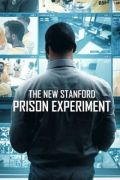
Few psychology studies are as famous, or as argued over, as the Stanford Prison Experiment. In 1971, a professor turned a university basement into a fake jail and watched ordinary students turn on each other in a matter of days. More than fifty years later, Netflix has tried it again, this time in a real prison and with cameras rolling around the clock. The New Stanford Prison Experiment premiered on October 21, 2026, as a six-episode unscripted series rated TV-MA.
The idea grabs attention. The reviews, though, are some of the harshest Netflix has received this year. Here's what the show does, how it differs from the original study and why so many critics walked away unimpressed.
What happened in 1971
The original study was led by Stanford psychology professor Philip Zimbardo. According to The Tab, 24 male college students were assigned by coin flip to be guards or prisoners, and each was paid $15 a day. The mock prison sat in the basement of Stanford's psychology department.
It was meant to last two weeks. It was stopped after six days, once guards became abusive and prisoners began to rebel and break down. Zimbardo argued the results showed how roles and power can change the way people behave.
The study later drew heavy criticism. Participants weren't screened beforehand, and they had no clear way to leave. Critics have also argued that the guards were encouraged toward hostility, which raises the question of whether the results showed human nature or simply followed instructions. That debate is part of the reason the new series exists, and it ends up shaping almost every review.
How the Netflix version works
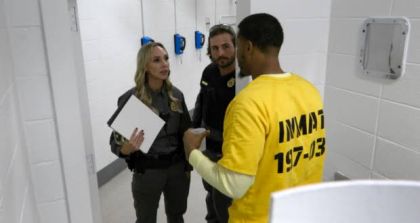
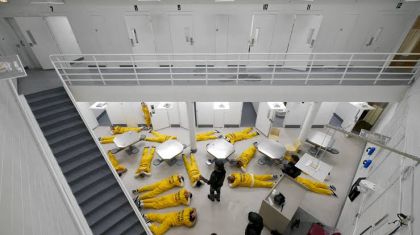
This time, 30 volunteers enter a real prison for two weeks and are split into guards and prisoners. Netflix says the cast was chosen from many different backgrounds and political views, unlike the all-male student group of 1971. The Daily Northwestern reports that filming took place at a correctional facility in Georgia.
Netflix's Tudum describes several safeguards. Everyone went through psychological screening first. Each participant had a safe word they could use to leave at any time, and psychologists were on call day and night. Filming relied on robotic cameras to keep the crew out of the way, and interviews were set up so participants couldn't see the person asking the questions.
Executive producer Jane Lipsitz of Alfred Street Industries was clear about where the line was. "If we were simply recreating the original experiment, that would be unconscionable," she said. She also teased the results: "What we discovered during this process was something we never saw coming."
The panel
Three experts comment on what happens inside. Alison Wood Brooks is a behavioral psychologist at Harvard. Trymaine Lee is a Pulitzer Prize-winning journalist. Michael Cantrell is a retired federal corrections professional with nearly 30 years of experience.
Of the three, Cantrell gets the warmest response. Daniel Hart at Ready Steady Cut singled him out for bringing real-world experience. He was much tougher on the rest of the panel, writing that "the behavioural psychologists offered nothing but obvious commentary." He went further: "I could have literally provided the same apparent insight that they were offering."
Ben Rosenstock at The A.V. Club had a similar complaint. "Too much of the series' limited runtime gets wasted on armchair psychology from an actual psychologist," he wrote.
Science or reality TV?
This is the question almost every critic raises. The show presents itself as a modern experiment. Reviewers mostly see a reality competition without the competition.
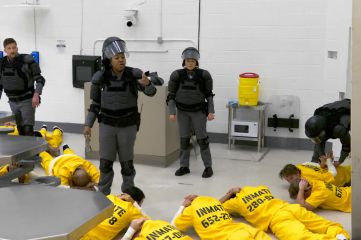
Rick Ellis at Forbes argued that the show repeats the original's biggest flaw. In his view, guards are told to keep control, riot gear enters the picture and shifts are kept apart, so the conflict on screen may come from production choices rather than human nature. "Producers control the setting, establish the rules, decide when to introduce new challenges," he wrote. "That is a considerable amount of power."
He also had a sharp line about the real prison setting: "But authenticity of location is not authenticity of experiment." The Tab noted that The Guardian called the series "patronising reality television" that "pretends to be science."
Dawson Miller of The Daily Northwestern summed it up more simply: "The six-episode series is basically a reality TV show." He also pointed out that all three women in the cast ended up as guards, which makes it harder to draw any conclusions about gender.
The ethics question
Some critics object to the project itself, not just how it was made. Jason Flatt at But Why Tho? gave it a 1 out of 10 and didn't hold back. "Nobody should have been allowed to attempt replicating this experiment," he wrote. He also made a point that's hard to argue with: "Prison isn't a playground for entertaining the masses."
That concern deserves weight. Real prisons hold real people, and incarceration affects millions of families in the U.S. Turning that environment into a backdrop for a binge-watch is a choice some viewers will be uncomfortable with, no matter how many safeguards are in place.
There's also a strange catch in the safeguards. Because the volunteers knew they were on TV and could leave whenever they wanted, the pressure that made the 1971 study so disturbing is mostly gone. Several critics argue that makes the show safer but also less meaningful.
Is there anything to like?
A little. Rosenstock credited the casting and a few dramatic moments, even though he concluded the series "doesn't fully work as either an academic study or a compelling reality show." Hart acknowledged that the premise is intriguing and that the questions about power are worth asking.
The format is also easy to get through. Six episodes is a short commitment, and fans of social-experiment reality TV may enjoy watching group dynamics shift, even if the lessons are familiar.
Reviews at a glance
Rotten Tomatoes lists the series at 33% from nine critic reviews. Hart's verdict was blunt: "The experiment completely fails, making the six episodes a waste of time." Rosenstock agreed that "There are no new conclusions to be found here, in the field of psychology."
Miller felt the ending was predictable. "It's a cliche that didn't require six episodes to arrive at," he wrote.
Should you watch it?
If you're curious about the original study and want to see how a modern version plays out, the series is short enough to try. Just treat it as reality TV, not research.
If you're hoping for new insights into human behavior, critics say you won't find them here. A good book or documentary about the 1971 study and the debates around it will likely teach you more.
And if the idea of turning a real prison into entertainment bothers you, that instinct is shared by several reviewers. It's a fair reason to skip it.
I think the most interesting part of this show is the argument around it. A study that's been questioned for decades now has a TV version facing the same questions, which says something about how hard it is to film human nature without changing it.
I would watch the original story's history before this one. It explains why the experiment still matters, and why recreating it was always going to be a risk.
Pros:
- Thoughtful exploration of institutional power and obedience
- Tense psychological atmosphere that builds discomfort effectively
- Measured pacing that allows performances and ideas to develop
- Strong ensemble acting with nuanced portrayals of authority and compliance
- Controlled visual style that reinforces the film’s oppressive setting
- Smart commentary on spectatorship and the audience’s role in systems of control
Cons:
- Occasionally becomes self-conscious in its thematic presentation
- Some scenes feel a bit too on-the-nose in emphasizing its message
- The slow pace may feel repetitive or demanding for some viewers
- Familiar subject matter may seem like a retread for audiences already aware of the story
RELATED MOVIES

Movie Reviews

Fortnite

Minecraft

Grand Theft Auto V

Toca Boca World