
Review
There's a reason people call it the most relaxing competition on television. Nobody screams. Nobody stabs anyone in the back. The worst...
Savoring the Art of Baking: A Cinematic Celebration of Life and Resilience
There's a reason people call it the most relaxing competition on television. Nobody screams. Nobody stabs anyone in the back. The worst thing that usually happens in the white tent is a collapsed sponge or a soggy bottom, and when it does, the other bakers rush over to help. The Great British Baking Show has been running in the U.K. since 2010, and for American viewers, Netflix is where it lives. Collection 14, the newest season, started on Netflix on September 25, 2026, with a new episode every Friday until the finale.
This year comes with the biggest change in a long time. Prue Leith has left the judging table, and Nigella Lawson has taken her seat next to Paul Hollywood. Here's what's new, who's baking and whether the tent still feels like home.
Why it's called "Baking Show" in the U.S.
In the U.K., the show is The Great British Bake Off, and it airs on Channel 4. In America, the name "Bake-Off" belongs to Pillsbury, which has run its own baking contest for decades, so the show goes by The Great British Baking Show here. And Netflix calls each season a "Collection" instead of using the U.K. series numbers, which is why American fans are on Collection 14.
The episodes are the same. They just reach Netflix a few days after they air in Britain. Channel 4 shows each new episode on Tuesday, and it lands on Netflix in the U.S. on Friday.
Nigella Lawson takes over
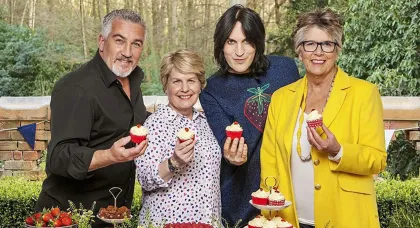
The judging table is the heart of the show, and it's had only a few faces. Mary Berry judged alongside Paul Hollywood for the show's early years on the BBC. When the show moved to Channel 4 in 2017, Prue Leith took her place. She stayed for nine seasons before stepping down.
Now it's Nigella Lawson's turn. She's one of the most famous food writers and TV cooks in Britain, known for her warm, almost poetic way of talking about food. She's never been the kind of cook who measures to the gram, which makes her an interesting partner for Paul Hollywood, who absolutely is.
Lawson seemed to know the pressure she was under. "Of course, it's daunting to be following in the footsteps of Prue Leith and Mary Berry before her," she wrote on Instagram, adding that she was "thrilled to be joining the team and all the new bakers to come."
The question for longtime fans is how the balance shifts. Leith brought sharp one-liners and bold jewelry. Lawson brings a softer, more sensual style, and she's likely to talk about flavor in a way that's very different from Hollywood's focus on bake and texture. That contrast could be the most interesting part of the season.
The hosts
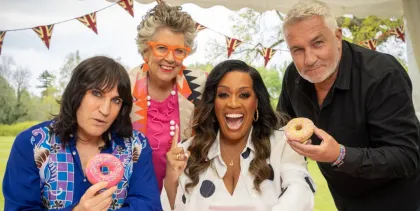
The hosts are unchanged. Noel Fielding is back with his oddball humor, strange outfits and gentle teasing of the bakers. Alison Hammond is back too, with her big laugh and her habit of hugging anyone who looks like they're about to cry.
The two of them have found a nice rhythm together. They're there to keep the mood light, steal a taste when no one's looking and call "Bakers, your time is up!" at exactly the wrong moment.
Meet the bakers
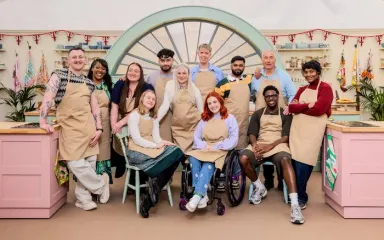
Twelve amateur bakers entered the tent this year, and as usual, they come from all over the country and every kind of job.
The youngest is Mo, a 21-year-old law student from the West Midlands, and the oldest is Gary, a 67-year-old retired garment technologist from Nottinghamshire. In between, there's Yannis, a 28-year-old pediatric doctor from London, and Connie, 63, an NHS hospital discharge lead, also from London.
There's Gabe, a 32-year-old artist and drag king from the West Midlands, and Tom, a 25-year-old hairdresser from West Yorkshire. Moyin is a 22-year-old political economy student from Essex. Clara, 24, is a marketing graduate from Hertfordshire, and Danni, 25, works as an administrator at an HGV service center in Dorset.
Rounding out the group are Molly, a 31-year-old accessibility coordinator from London, Nikki, a 50-year-old advertising post-producer from London, and Shannon, a 29-year-old project planner and scheduler from Gloucestershire.
It's a nicely mixed group, with a good spread of ages and backgrounds. That's always been one of the show's quiet strengths. A retired garment technologist and a 21-year-old law student end up cheering each other on over the same bowl of buttercream.
How each episode works
If you're new to the show, the format is simple. Each episode has a theme, and each theme has three challenges.
The Signature is a bake the contestants have practiced at home, showing off their own style. The Technical is a surprise recipe chosen by one of the judges, often with half the instructions missing, and the bakers have to figure it out on the spot. It's judged blind, and the results are ranked from last to first. And the Showstopper is the big, ambitious bake that's supposed to wow the judges, usually with hours on the clock and a design that's a little too complicated.
At the end of each episode, one baker is named Star Baker, and one is sent home. The final three compete in the last episode, and the winner gets a glass cake stand and some flowers. No cash prize. Just glory and a lot of baking.
What's new this season
Besides Nigella, the biggest change is a new theme called Audience Choice Week. For the first time, fans voted on the Signature, Technical and Showstopper challenges for one episode. It aired as the third episode, and it's a fun twist for a show that rarely changes its formula.
The season has also hit the classic weeks. It opened with Cake Week, followed by Biscuit Week, and Bread Week arrives on Netflix on October 16. Bread Week is famous among fans as the week Paul Hollywood is at his most demanding, so it's a big test for everyone.
The semi-final is set for November 20 on Netflix, and the grand final follows on November 27, just in time for Thanksgiving.
Why it still works
Lots of reality shows have tried to copy this one, and few have matched it. The secret isn't the baking. It's the kindness.
The bakers are competing for nothing but a cake stand, so there's no reason to be cruel. The judges can be blunt, especially Hollywood, but they rarely mock anyone. And the setting, a white tent in the English countryside with lambs and ducks in the cutaway shots, makes the whole thing feel like a summer picnic.
That gentleness has made it a comfort show for millions of viewers. It's what people put on after a bad day, or while they fold laundry on a Sunday afternoon.
Should you watch it?
If you've watched before, yes. The biggest question this season is how Nigella fits in, and the only way to find out is to watch her and Hollywood figure each other out week by week.
If you've never seen it, this is a good time to start. A new judge means you're not the only one getting to know the table, and the weekly release makes it easy to follow along. Just be warned that you'll want to bake something by the end of the first episode.
I'll admit I'm most curious about the Technical challenges this year. Nigella's recipes are famously forgiving, and Technicals are famously not. Seeing what she sets for the bakers, and how strict she is about it, could tell us a lot about what kind of judge she wants to be.
So make a cup of tea, grab a biscuit, preferably one that isn't soggy, and settle in on Friday. The tent is open, and there's a new face at the table.
Pros:
- Beautiful cinematography that captures the art of baking
- Innovative non-linear narrative that deepens character development
- Authentic portrayal of British cultural nuances
- Memorable soundtrack that complements the film's mood
- Careful attention to detail in production design enhances the viewing experience
- Unique integration of culinary art with emotional storytelling
Cons:
- Non-linear storytelling might confuse some viewers
- Niche subject matter might limit its appeal to a broader audience
- Pacing discrepancies in the middle sections may affect overall flow







Movie Reviews

Fortnite

Minecraft

Grand Theft Auto V

Toca Boca World