Review
John Steinbeck called East of Eden the book he'd been practicing for his whole life. He published it in 1952, a long, sprawling family...
East of Eden: Rediscovering Timeless Brilliance and Enduring Narratives
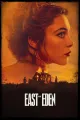
John Steinbeck called East of Eden the book he'd been practicing for his whole life. He published it in 1952, a long, sprawling family saga set in California's Salinas Valley, and it's been daring people to adapt it ever since. Elia Kazan made it into a movie in 1955, with James Dean in his first starring role, but that film only covered the last part of the book. Now Kazan's granddaughter, the writer and actor Zoe Kazan, has taken on the whole thing. Her version, a seven-episode limited series starring Florence Pugh, arrived on Netflix on October 1, 2026, with all episodes released at once.
It's a big and ambitious show, and it's already split critics in an interesting way. Most love it. A few find it a slog. Here's what it's about, who's in it and whether it's worth seven hours of your time.
What it's about
Netflix sums it up in one line: "In the early 1900s, a fiercely independent woman drives a rift between two brothers, igniting a saga that unfolds across two generations."
That woman is Cathy Ames, played by Pugh. The brothers are Adam Trask, played by Christopher Abbott, and his half-brother Charles, played by Mike Faist. Adam is gentle and trusting. Charles is jealous and quick to anger. Their father, Cyrus, played by Tracy Letts, loves one of them more than the other, and both of them know it.
When Cathy enters their lives, everything that was already cracked starts to break. And the story doesn't stop with Adam and Charles. Years later, Adam's twin sons, Cal and Aron, played by Joseph Zada and Joe Anders, grow up repeating the same pattern: one son who seems good and easy to love, and one who feels like he has to fight for every scrap of approval.
If that sounds a lot like the story of Cain and Abel, it's meant to. Steinbeck built the whole book around it, and the title comes from the line in Genesis about where Cain went after he killed his brother.
The people behind it
Zoe Kazan wrote the series and runs it alongside co-showrunner Jeb Stuart. Her family connection to the story is hard to ignore. Her grandfather's 1955 film is a classic, but it's also a very loose version of the book. Kazan has said that what drew her in was Steinbeck's writing, which she called "personal, shocking, profound, and free," and that it has "kept me enthralled by East of Eden since I first read the book as a young teen."
Garth Davis, who directed Lion, directed the first four episodes. Laure de Clermont-Tonnerre directed the last three. Pugh is also an executive producer, and she's been attached to the project since 2022.
The series was filmed in New Zealand, in Auckland and on the South Island around Dunedin and Oamaru, from October 2024 to March 2025. That might sound strange for a story so tied to California, but the wide valleys and old towns of the South Island stand in for early-1900s farm country surprisingly well.
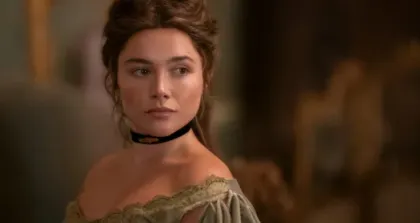
Florence Pugh as Cathy
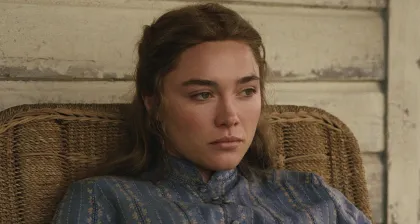
Cathy Ames is one of the most famous villains in American fiction. In the novel, she's cold and clever, and almost impossible to understand. Steinbeck describes her as if she were born without a conscience. Playing her is a trap. Lean too hard into evil, and she turns into a cartoon. Try too hard to explain her, and she loses her menace.
Critics say Pugh avoids both. Variety's Alison Herman wrote that the show "feels worth it for Pugh and Lee's standout efforts, which etch their characters deep into one's memory." Variety India went further and called her Cathy a career best. Netflix describes the character as an antihero, which hints at the show's approach. This version spends more time on how Cathy became who she is, without letting her off the hook.
Pugh has already shown in Midsommar and Little Women that she can play people who are hard to like and impossible to look away from. Cathy may be the biggest test yet.
Hoon Lee steals scenes
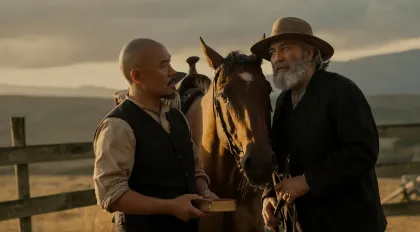
If Pugh is the show's fire, Hoon Lee is its heart. He plays Lee, the Trask family's cook and housekeeper, who turns out to be the wisest person in the story. In the book, Lee is a Chinese American man who speaks in broken English around strangers because it's what they expect, then drops it completely with people he trusts. It's one of Steinbeck's most quietly radical ideas, and it gives an actor a lot to work with.
Critics have singled Lee out almost as much as Pugh. Variety's review headline called the two of them "the beating heart" of the adaptation. And since Lee is the character who explains the book's most famous idea, the Hebrew word "timshel," which he translates as "thou mayest," he matters a lot. It's no accident that the final episode is called "Timshel."
The rest of the cast
Christopher Abbott takes on Adam, a decent man who's almost dangerously trusting. Mike Faist, from West Side Story and Challengers, plays Charles, the angry, wounded brother. Tracy Letts plays Cyrus, the father whose favoritism sets everything in motion.
Ciarán Hinds plays Samuel Hamilton, a big-hearted Irish neighbor who's based on Steinbeck's own grandfather. Martha Plimpton plays Faye, a woman who runs a brothel and becomes an important figure in Cathy's life. And Joseph Zada and Joe Anders play the twins, Cal and Aron, who take over the story in the later episodes. Cal is the role James Dean made famous in 1955, which is no small thing to step into.
How it compares to the 1955 film
Elia Kazan's movie is a classic, mainly because of James Dean. But it only adapts the last section of the novel, the part about Cal and Aron. Cathy barely appears, and Adam and Charles's whole history is cut.
The new series tells the whole story, from the brothers' youth through the twins' coming of age. That makes it feel closer to what Steinbeck actually wrote. The Hollywood Reporter's Daniel Fienberg put it bluntly: "This, unlike the 1955 film, feels like it understands why East of Eden is a special text."
It's a little funny that it took Kazan's granddaughter to fix what Kazan left out. But it also makes sense. Seven hours gives the story room that a two-hour film never could.
What critics said
On launch day, the series held an 89% score on Rotten Tomatoes from 27 reviews, according to Forbes, slightly higher than the 86% for the 1955 film.
The praise has been big. Hunter Ingram of the AV Club wrote that "Kazan has built a towering new standard for what literary adaptations for TV could and should be." The Financial Times called it an "opulent and persuasive adaptation."
But the critics who didn't like it really didn't like it. Newsday's Verne Gay called it "a grim, gloomy, sodden slog." The Wall Street Journal's John Anderson wrote that "it simply feels like Ms. Kazan ran out of daring." And even TV Guide, which gave it a positive review, said it "never quite feels like a magnum opus on the same level as its source material."
So the split is clear. The performances are getting near-universal praise. The pacing and the heavy mood are where opinions part ways.
Should you watch it?
If you love big literary dramas, yes. This is the kind of show that rewards patience. It's slow and sad, but it's also strongly acted, according to almost every review, and it takes a hard book seriously. Fans of The Crown, Lonesome Dove or HBO's Mare of Easttown will probably find a lot to like.
If you want something light or fast, this isn't it. The Newsday review wasn't wrong that it's gloomy. Seven episodes of family betrayal in the early 1900s is a lot, and the show doesn't rush.
And if you've never read the book, that's fine. The series stands on its own. But it might send you to the library afterward. That's usually the sign of a good adaptation.
I'll admit I'm most curious about how the show handles the twins. The first half belongs to Pugh, and by every account she's terrific. But Steinbeck's real point lives in the second generation, in the idea that Cal isn't doomed to repeat his father's and uncle's mistakes. If the last three episodes land that, this could be the definitive version of the story.
So clear a few evenings, start with "Brothers" and give it time. And when Lee finally explains what "timshel" means, pay attention. It's the whole book in two words.
Pros:
- Rich character development and profound performances.
- Visually captivating cinematography that enhances storytelling.
- Subtle and thought-provoking philosophical undertones.
- Dynamic mix of emotional depth and technical mastery.
- Availability on multiple streaming platforms provides great viewing flexibility.
- Timeless narrative that resonates with generations.
Cons:
- Complex narrative might be challenging to grasp in one viewing.
- Some technical and stylistic elements can seem dated compared to contemporary films.
- Pacing may feel slow for modern audiences.






Movie Reviews

Fortnite

Minecraft

Grand Theft Auto V

Toca Boca World