Review
In October 2023, forecasters expected a modest storm to brush past Acapulco. Within about a day, it became something much worse. Hurric...


Surviving Hurricane Otis: A Tense and Human Documentary Review
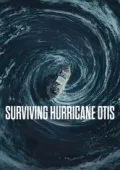
In October 2023, forecasters expected a modest storm to brush past Acapulco. Within about a day, it became something much worse. Hurricane Otis exploded into a Category 5 and slammed into the city with almost no warning, killing at least 52 people and leaving dozens more missing. Three years later, that night is the subject of Surviving Hurricane Otis, a Mexican survival drama that premiered on Netflix on October 23, 2026.
The film, called Contra el huracán in Spanish, climbed straight to No. 1 on Netflix's global movie chart. Here's what it's about, how much of it is true and whether the drama matches the scale of the storm.
The storm nobody saw coming
It helps to know how unusual Otis was. According to What's on Netflix, it was the first Pacific hurricane on record to make landfall at Category 5 strength, with peak winds of 165 mph. Martin Cid Magazine notes that it strengthened by 95 knots in 24 hours, while most forecast models had predicted, at most, a low-end Category 1.
Damage estimates run between $12 billion and $16 billion, making it the costliest tropical cyclone in Mexico's history. For people in Acapulco, though, the numbers are only part of it. Many had hours, not days, to prepare.
That speed is what makes Otis such a frightening story. Hurricanes usually give coastal cities several days of warnings and evacuation orders. Otis fed on unusually warm water off the Pacific coast and grew faster than the tools meant to predict it. By the time people understood how dangerous it was, there was little time left to get boats into safe harbors or people off the water.
The people on the water
The film focuses on a group that suffered heavily that night: yacht crews. In Mexico, it's common for workers to stay aboard luxury boats during storms to watch over them for their owners, a practice known as velar. Martin Cid Magazine cites a La Opinión tally showing that 25 of the 47 people officially listed as missing in Acapulco were yacht crew or caretakers.
That detail gives the film its emotional weight. These were working people asked to protect someone else's property in the middle of a historic storm, and many did not come home.
The story on screen
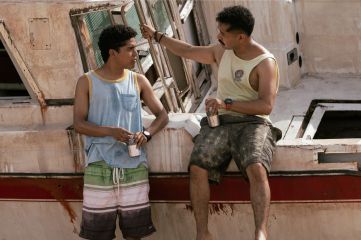
Netflix's synopsis is short: "Two estranged brothers struggle to survive Hurricane Otis in Acapulco, where their bond and courage turn adversity into hope." Benny Emmanuel plays Wirpul, and Kristyan Ferrer plays his half-brother, Candi. The two are on the water when the storm hits, and they have to rely on each other while sorting out the tension between them.
The supporting cast includes Mónica del Carmen, Mónica Jiménez, Gonzalo Vega Jr. and Andrew Leland Rogers. The film runs about 97 minutes, is in Spanish and is rated TV-MA.
How much is true?
The film is inspired by a real story, but the characters are invented. The Cinemaholic reports that it draws on the experience of Marlon Valdez and Jonathan Chino, two yacht workers who were caught at sea during Otis and survived. Both advised the production.
In real life, they're friends and colleagues, not brothers. The half-brother relationship was created for the movie, and so was much of the plot. AuralCrave notes that the two real men can be heard in the film as voices answering Wirpul's distress calls, a small touch that ties the fiction back to the people who lived it.
I think that's a respectful choice. It keeps the real survivors present without turning their actual lives into a melodrama.
Built in a water tank
The film's director, Jorge Michel Grau, is best known for the horror film We Are What We Are. He co-wrote the script with José Leonor Alejandro and Venancio Villalobos.
Grau has spoken about how ambitious the project was for Mexican cinema. "A film about a natural disaster of this scale had never been made in Mexico," he said, according to What's on Netflix. He told El País the crew tried to recreate the storm as accurately as possible: "We knew at what time the wind blew and in which direction, and that's how we filmed it."
The storm sequences were shot at Estudios Churubusco in Mexico City, in a 200-square-meter water tank. Martin Cid reports that the crew used three 8-tonne boats along with wind machines and water cannons, then added digital effects. The Cinemaholic puts the size of the production at about 800 people.
What critics are saying
Early reviews are scarce. Rotten Tomatoes had no critic score at the time of writing, which is common for international Netflix releases in their first week.
One of the few full reviews comes from Movieguide. India McCarty gave the film 2 out of 4 stars for entertainment and a "SKIP IT" verdict. She praised the visuals, writing, "The special effects are its main strength." She was less kind about the story: "Despite massive storm scenes, this movie quickly becomes tedious." Her summary called it "a bloated, uneventful thriller that offers plenty of turbulence but little substance."
That puts the film in a familiar spot. Disaster movies often wow on spectacle and then struggle to make the human drama feel as big as the weather.
A hit anyway
Viewers haven't waited for critics. FlixPatrol data cited by Men's Journal showed the movie at No. 1 on Netflix's worldwide film chart one day after its release, ahead of Animals.
Part of that is the true-story hook. Natural disaster films always draw curiosity, and Otis is recent enough that many viewers remember the news coverage. For audiences in Mexico, it's also personal.
Things to know before watching
The film is intense. Movieguide flags heavy language throughout, along with moderate violence that includes some bloody injury scenes. The storm sequences are chaotic and loud, and they may be hard to watch for anyone who has lived through a hurricane.
It's also worth remembering that real lives were lost in this event. The film is a dramatization, not a documentary, and it doesn't claim to tell the whole story of Acapulco that night.
Should you watch it?
If you enjoy survival films and want to see how a Mexican production handles a large-scale disaster, it's worth a look. The practical effects and water work are the clearest strength.
If you want a deep, character-driven drama, early reviews suggest the story may not hold up as well as the storm scenes. And if you're hoping for a factual account, a documentary or news coverage of Otis will serve you better.
I would watch it with the real story in mind. Knowing that the workers who stayed on those boats were real people makes every wave on screen mean more, and it's a reminder of how fast a forecast can turn into a disaster.
Pros:
- Clear, disciplined storytelling that avoids melodrama.
- Strong sound design that makes the storm feel physically present.
- Naturalistic performances that feel believable under pressure.
- Focuses on human-scale details that make the disaster emotionally immediate.
- Avoids sensationalism and treats the real event with respect.
- Visually grounded style that supports the film’s realism.
- Highlights broader issues like preparedness, vulnerability, and infrastructure.
Cons:
- Its restrained pace may feel too slow for viewers expecting a conventional disaster film.
- Relies more on atmosphere and realism than on big dramatic set pieces.
- The emotional tone can be heavy and uncomfortable throughout.
- May feel less accessible to viewers looking for entertainment over reflection.







Movie Reviews

Fortnite

Minecraft

Grand Theft Auto V

Toca Boca World