Review
Most true-crime documentaries arrive years after the headlines fade. Instadocs: Jane Doe v. Cornell arrived while the story was still i...
Inside the Record: A Riveting Look at Jane Doe v. Cornell
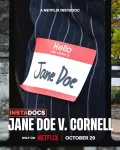
Most true-crime documentaries arrive years after the headlines fade. Instadocs: Jane Doe v. Cornell arrived while the story was still in the news. The short documentary premiered on Netflix on October 29, 2026, only weeks after the case drew national attention, and it runs just 35 minutes.
It covers a lawsuit brought by a former Cornell University student who alleges she was sexually assaulted at a fraternity house in October 2024. It's a difficult subject, and the case is ongoing. Here's what the documentary covers, how it handles the allegations and what critics have said.
A note before reading: this review discusses sexual assault allegations. No one named in connection with the case has been found responsible in court, and the claims described here are allegations.
What Instadocs is
Instadocs is a new Netflix series of fast-turnaround documentaries. Netflix's Tudum describes it as a series "that takes you to the very center of the loudest headlines." Each film is meant to "move at the speed of each real-life story and arrive at the height of the conversation."
The series started in May 2026 and has covered topics from the Alex Murdaugh case to artificial intelligence. Jane Doe v. Cornell is the fifth installment. Words + Pictures produces the series, with Josh Tyrangiel and Connor Schell among the executive producers and Steve Yaccino as showrunner.
The case
The plaintiff is identified only as Jane Doe. According to Netflix, she alleges she was drugged and raped at a campus fraternity house. The Boston Globe reports that she filed a civil lawsuit alleging she was assaulted by seven fraternity members in 2024.
Netflix says the documentary looks at the two main paths students have for reporting sexual misconduct: campus police and the Title IX process. "Jane Doe tried both," Netflix explains, "and the outcry over her case has pressed the question: are they delivering on that promise?"
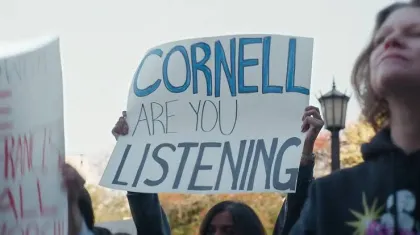
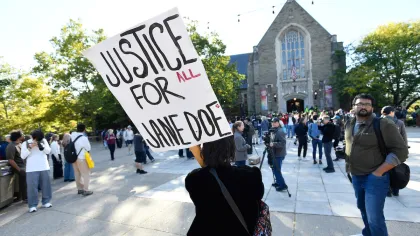
The case sparked protests on campus and, as The Viewer's Perspective put it, "a broader debate over how colleges investigate and respond to allegations of sexual assault."
Jane Doe does not appear on camera, and she remains anonymous. The Globe reports that the seven accused men declined to participate.
Student reporters in the spotlight
The most distinctive choice in the film is who tells the story. At its center are the editors of The Cornell Daily Sun, the university's student newspaper, which reported extensively on the case. Editors Sophia Dasser and Cereese Qusba guide viewers through how the story developed.
It's a smart angle. Student journalists often cover campus stories long before national outlets arrive, and their work here shows how much responsibility that can involve. It also gives the documentary a perspective rooted in the community where these events took place.
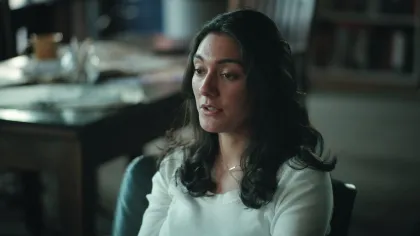
Other voices include New York Governor Kathy Hochul, Jane Doe's attorney and other Cornell students. Amanda Walsh of the Victims Rights Law Center, a former Title IX coordinator at Brown University, adds context about how campus investigations work. According to the Globe, a member of a different Cornell fraternity is also interviewed at length.
How it handles the subject
A 35-minute film can't cover everything, and it doesn't try to. The focus is on the reporting process, the public response and the systems meant to handle these cases.
Chris Vognar at the Boston Globe noted that the film includes messages allegedly shared by the accused men on the night in question. Those moments are hard to watch, and viewers should be prepared for them.
The overall approach, though, is measured. Vognar wrote that "The Instadoc format gives viewers the gist of the story in a responsibly produced capsule form." That word, responsibly, matters for a story involving an anonymous plaintiff and a case that hasn't been resolved.
What critics said
Reviews are few so far, which is common for a film released this quickly. Vognar's review is the most detailed. He called the film "a brisk, thoughtful report on a story still unfolding day by day."
He also named its limits. The film, he wrote, "can't match the depth or journalistic rigor of "Frontline."" That's a fair comparison, since PBS's long-running series has far more time and resources for each investigation. He ended on a hopeful note: "Here's hoping for a follow-up."
John Serba at Decider made a similar point, writing that the film "isn't far removed from a longer news story we'd see on CNN." That's not necessarily a criticism. For many viewers, a clear, well-sourced news report is exactly what they want.
Rotten Tomatoes didn't have a critic score at the time of writing.
The trade-off of speed
The Instadocs idea has clear advantages. It brings attention to a story while decisions are still being made, and it gives a platform to people closest to the events.
There are risks too. A documentary made in weeks can't wait for the legal process to play out, and later developments may change how the story looks. Viewers should treat the film as a snapshot of a moment, not a final account.
That's especially important here. The case involves serious allegations against people who have not been found responsible in court, and a survivor whose identity is protected. A responsible viewing means keeping both of those facts in mind.
Who should watch
The documentary will interest students and parents, along with anyone following debates about how universities handle sexual misconduct. It's also a strong look at student journalism under pressure.
It may be hard to watch for anyone who has experienced sexual violence. The film discusses the alleged assault directly and includes upsetting material. If you need support, organizations such as RAINN in the U.S. offer confidential help.
At 35 minutes, it's easy to fit into a single sitting, but it's not light viewing.
Should you watch it?
If you want a clear overview of a case that's been in the news, this is a good starting point. It explains the key questions without rushing to answers.
If you're looking for a deep investigation, you may want to wait. As the Globe suggested, a fuller account may come later.
I think the film's best decision is putting the student editors front and center. Their reporting is what pushed this story into public view, and the documentary gives them credit for it.
I would watch it as one piece of a larger story, and follow the case as it develops. The most important chapters may still be ahead.
Pros:
- Sharp, disciplined documentary structure that builds tension through accumulation rather than dramatization.
- Clear, accessible presentation of a complex legal and institutional conflict.
- Strong editing that balances speed and patience effectively.
- Restraint in tone, which makes the film feel credible and grounded.
- Thoughtful handling of the central subject, keeping Jane Doe human rather than symbolic.
- Smart portrayal of an institution as a system rather than a single villain.
- Effective use of archival material, transcripts, and interviews to support the narrative.
- Highlights broader issues of accountability, truth, and power beyond the specific case.
Cons:
- The polished approach can make some of the emotional impact feel contained.
- Middle sections may feel a bit too efficient for viewers wanting deeper institutional context.
- Its legal focus may feel dense or repetitive for audiences looking for a more personal documentary style.







Movie Reviews

Fortnite

Minecraft

Grand Theft Auto V

Toca Boca World