Review
Most TV comedies start with a pitch meeting. Minimum Wage started as a string of short videos about teenagers barely holding a pizza sh...
Minimum Wage: A Humane Portrait of Work, Fatigue, and Dignity
Most TV comedies start with a pitch meeting. Minimum Wage started as a string of short videos about teenagers barely holding a pizza shop together, posted by the YouTube channel American High. Those clips caught on, and now Netflix has turned them into a full series. Season 1 premiered on October 26, 2026, with 14 short episodes.
It's a loud, silly workplace comedy built for quick viewing. Whether that's a good thing depends a lot on how you feel about the original shorts. Here's what to expect.
Welcome to The Slice Club
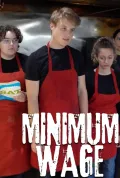
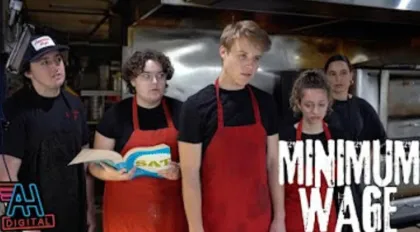
The show is set at The Slice Club, a local pizzeria run almost entirely by high school students. Rotten Tomatoes sums it up neatly: "Teens struggle to run a local pizzeria while juggling school, a manic boss and minimum wage."
Things kick off when the owner, Terry Sylvester, drops by to decide whether to keep the place open or sell it. The staff tries to show him how they run things, which goes about as well as you'd expect from a crew of teenagers with more confidence than training.
From there, each episode is its own small disaster. Episode titles like "No Phones," "Lottery Tickets" and "Prank Call" give you a sense of the tone. The stakes are low, and the jokes come fast.
From YouTube to Netflix
The series is adapted from American High's web series of the same name. According to HighOnFilms, citing Netflix, the original shorts had pulled in more than 30 million views across social platforms by May 2026.
Jeremy Garelick and Will Phelps, the duo behind American High, created the Netflix version and serve as showrunners. They also executive produce alongside Axelle Azoulay. American High has built a reputation for making comedies quickly and on small budgets, and that approach carries over here.
The crew behind the counter
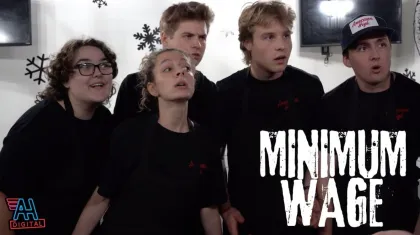
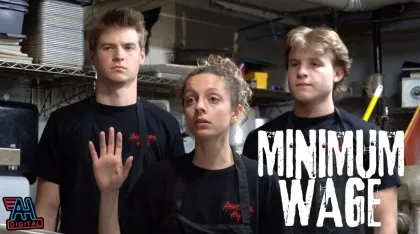
Most of the cast came over from the original shorts, and the characters share the actors' first names. Grace Reiter plays Grace, the young manager who is in charge but rarely in control. Aidan Micho and Ryan Micho, Hyde Healy, Julia DiCesare, Luke Burke and Tommy Armstrong round out the staff.
The biggest name is Randall Park, known for Fresh Off the Boat and Always Be My Maybe. He plays Mr. Sylvester, the eccentric owner, and several critics single him out as a highlight.
One thing viewers will notice quickly is that the "teenagers" don't look much like teenagers. Hope Bernard at the Indiana Daily Student pointed out that most of the cast is in their 20s. That's a long TV tradition, though, and it doesn't really get in the way of the jokes.
Short episodes, fast pace
The episodes are very short, roughly 10 to 20 minutes each depending on the source. That makes the whole season easy to finish in an evening or two.
It's shot in a mockumentary style, with the staff talking to the camera like in The Office. The swearing is bleeped, which keeps the tone on the lighter side.
Netflix ordered 28 episodes in total. Only the first 14 are out so far, and Netflix hasn't confirmed when the rest will arrive.
What critics enjoyed
Reviews are mixed, but the more positive ones focus on energy and the cast. Joel Keller at Decider wrote that it "is a show that will elicit a few good laughs and features a cast that's fun to watch." He added that "each episode is a pleasant way to pass 12-15 minutes, and that might be enough."
Joyce Slaton at Common Sense Media gave it 3 out of 5 and found the right tone for it: "Minimum Wage is a goof, just like most minimum wage jobs, but viewers who like to laugh will want to clock in anyway."
Tasnim Jahan at K-waves and Beyond praised the chemistry. "The thing that makes this show more fun for me is the chemistry of the cast," she wrote, adding that Park "plays the pompous boss at the shop" and is "great to have around in the show."
Bernard was a fan of the lead: "I especially enjoyed Grace Reiter's indifferent delivery as the manager, who, although in charge of the entire business's operation, has little clue how to run it."
What critics didn't
The low budget is the most common complaint. Daniel Fienberg at The Hollywood Reporter wrote that "The series looks as conspicuously cheap as it presumably was." Still, he called it "an amusing, energetic, instantly disposable binge."
Rendy Jones at What's on Netflix gave it 2.5 out of 5 with a pizza joke of his own, saying it "Tastes better than a Little Caesars pizza but is far from baked to full deliciousness."
Harsher reviews took aim at the humor. Mohan Nasre at Flickonclick gave it 1.5 out of 5. "The biggest problem is that the comedy feels like a string of loose sketches," he wrote. "When every joke is shouted, none of them stands out."
Neerja Choudhuri at Midgard Times scored it 3 out of 10, calling the jokes repetitive and the plot "highly predictable," though she said the cast "has done a great job in their respective roles."
The scores
Rotten Tomatoes lists the season at 80% from five critic reviews, with an audience score of 82%. Metacritic hadn't posted a final score at the time of writing, but the three reviews listed there all scored 60.
That spread tells the story. Few people call it great, but plenty find it fun enough for what it is.
Who it's for
The clearest audience is fans of the original shorts. If you already know these characters from your phone, the Netflix version gives you more of them, with a few new faces and longer stories.
It's also a decent fit for teens and younger adults who like fast, chaotic humor. Bernard described it as "a refreshing take on Gen-Z humor," and that's probably the best way to approach it.
The age rating varies by listing, from TV-14 to TV-MA, so parents may want to check one or two episodes first.
Should you watch it?
If you want a sharp, story-driven comedy, this probably isn't it. The plots are thin, and the budget shows.
If you want something light to put on after a long day, the short episodes make it easy to sample. Watch the first two, and you'll know quickly whether the humor works for you.
I think the most interesting part is the show's journey. A comedy that started as cheap online shorts now sits on Netflix next to big-budget series, and that says a lot about where TV comedy is heading.
I would suggest going in with low expectations and an appetite for nonsense. That's the attitude the show itself brings to the counter.
Pros:
- Quiet, humane storytelling that treats minimum-wage labor with seriousness and dignity.
- Strong character-driven writing that avoids turning people into simple symbols or stereotypes.
- Naturalistic tone with dry humor that feels earned rather than forced.
- Grounded visual style that supports the film’s realism and working-class setting.
- Effective pacing that lets the pressure of daily routine build gradually.
- Nuanced view of systems and institutions, showing complexity instead of cartoon villains.
- Emotional honesty that acknowledges precarity without relying on easy catharsis.
Cons:
- The story can feel familiar at times and leans on some well-worn social drama beats.
- Viewers looking for high drama or major plot twists may find it too subdued.
- Its restrained style may feel slow or overly understated for some audiences.





Movie Reviews

Fortnite

Minecraft

Grand Theft Auto V

Toca Boca World