Review
Season 3 of From arrives with the kind of confidence that only a series with a truly unnerving premise can earn. By now, the town, the...
From Season 3 Review: Horror, Exhaustion, and the Cost of Survival
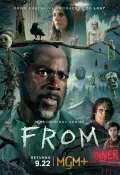
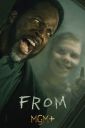
Season 3 of From arrives with the kind of confidence that only a series with a truly unnerving premise can earn. By now, the town, the forest, the voices on the radio, and the rules that nobody fully understands are no longer mere mysteries to be solved; they are part of the show’s language. What makes this season stand out is that it stops pretending the audience needs constant reassurance. Instead, it leans harder into dread, emotional fracture, and the slow realization that survival is not the same thing as progress. In an era when many genre shows mistake momentum for meaning, From keeps insisting on atmosphere, consequences, and the quiet terror of not knowing whether the world itself has gone wrong.
The first thing I noticed this season is how much more assured the writing feels in the spaces between the shocks. The series has always been good at end-of-episode jolts, but Season 3 understands that the real nightmare is repetition. Doors still have to be sealed by nightfall, people still argue over the rules, and the same impossible questions keep circling back with no satisfying answer. That might sound like stalling, yet the show uses it to expose personality under pressure. Every conversation carries an edge now. Trust is thinner. Hope is thinner. Even small gestures feel loaded, as if the town is watching and waiting to punish any display of certainty.
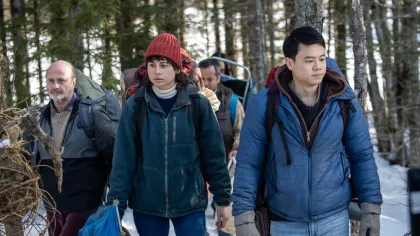
One of the season’s strongest qualities is how it treats fear as communal rather than purely individual. Horror on television often isolates a hero and lets everyone else orbit their suffering, but From has always been better than that. Season 3 continues to distribute anxiety across the ensemble, and that choice pays off. Characters who once seemed to occupy separate emotional lanes are now visibly shaped by each other’s trauma, stubbornness, and grief. This is not a story about one person decoding the universe. It is about a collection of people trying to preserve mutual trust while the setting itself seems designed to erode it.
That ensemble approach also gives the season its best dramatic fuel. There are no one-note reactions here. Grief does not produce neat arcs. Fear does not make everyone noble. Some characters retreat into duty, some into denial, some into control, and some into reckless certainty. The show’s most interesting scenes are often the ones where two people who should be allies discover they are interpreting the same catastrophe in completely incompatible ways. That tension gives the series texture. It also keeps the viewer engaged even when the larger mythology chooses opacity over explanation.
As for the mythology, Season 3 remains frustrating in the best and worst senses of that phrase. It does not hand over answers in tidy bundles, and it knows exactly how far it can push patience before irritation begins. Yet I would argue that the season earns much of that delay because it keeps the emotional stakes active. Every new clue feels less like a revelation than a threat to the fragile explanations people have built for themselves. The writing understands that in a horror mystery, answers are not inherently comforting. Sometimes they are devastating. Sometimes they only reveal how much larger the trap really is.
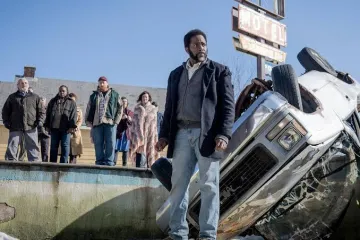
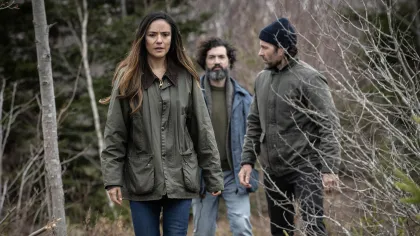
Visually, the season continues the show’s most effective trick: making ordinary spaces look contaminated by the possibility of harm. Windows, hallways, roads, open fields, and domestic interiors all carry an anxious charge. The direction often favors stillness over speed, which is a smart choice. When a frame lingers a little too long on a face, a doorway, or a patch of darkness beyond the foreground, the audience starts to do the work themselves. That is the show’s real engine. It allows the imagination to become complicit. The best suspense is not delivered; it is invited.
I also appreciate how Season 3 resists the temptation to overexplain its symbols. The series clearly loves patterns, warnings, recurring images, and half-glimpsed correspondences, but it does not flatten them into a puzzle box with a neat lid. There is still room for interpretation, and that is valuable. A lesser show would decorate itself with mystery and then rush to decode it. From instead preserves uncertainty as a mood. Even when a scene appears to confirm a theory, it often does so in a way that creates two or three new ones. For viewers who enjoy active analysis, this is a gift. For viewers who want closure, it is likely maddening.
Performance-wise, the season benefits from a cast that has fully settled into the series’ rhythm. Nobody sounds like they are trying to sell the premise anymore; they are living inside it. That’s essential. A show like this collapses if the actors appear aware of how strange the material is. Here, the performances are grounded enough to keep the supernatural elements from feeling cartoonish, and expressive enough to make the emotional damage believable. The smaller reactions matter just as much as the louder confrontations. A pause before answering. A glance toward a door. A refusal to say what someone is really thinking. These details accumulate into a surprisingly rich portrait of collective strain.
Season 3 is also more willing than earlier chapters to highlight the cost of adaptation. It is easy for a long-running mystery series to make every new season feel like another set of obstacles to overcome. From does something more interesting: it shows the ways in which prolonged survival changes people’s moral weather. Compromise starts to resemble strategy. Strategy starts to resemble surrender. Bravery can shade into recklessness. Compassion can become a liability if it keeps getting punished. The town does not merely attack bodies; it rearranges ethics. That is why the season feels so tense even in calmer episodes. Nothing remains psychologically stable for long.
If there is a weakness here, it is that the show can still overindulge in withholding. At times, a scene feels designed less to deepen the story than to delay a reveal one more episode. I don’t mind ambiguity. I do mind repeated teasing if it begins to resemble a holding pattern. Fortunately, Season 3 usually balances that tendency with enough character movement to keep the experience compelling. Even when the story drifts, the people do not. That distinction matters. A mystery can wind without direction for a while if the emotional core stays alive.
What keeps me invested most is the season’s understanding of dread as a form of exhaustion. The characters are not simply afraid; they are tired of being afraid, and that fatigue gives the series an unusually human pulse. Fear is dramatic. Weariness is more subtle, and far more tragic. Season 3 captures the sensation of waking up into the same nightmare with only the thinnest hope that today might be different. That emotional realism gives the supernatural framework much more weight than a standard horror premise would normally carry.
By the end of the season, From has not solved itself, and I suspect that is exactly why it remains so effective. The show is not interested in comforting its audience with the fantasy that logic will eventually restore order. It’s interested in what happens when order fails and people are forced to improvise meaning from fragments. That makes the viewing experience less like following a conventional drama and more like spending time in a black box where every sound matters. For viewers who value tension, atmosphere, and a story willing to stay unsettling, Season 3 is one of the more rewarding pieces of genre television currently available.
In short, this season is not for the impatient, but it is absolutely for the committed. It rewards attention, punishes complacency, and keeps the uneasy promise that the next answer may be more troubling than the question. That is not just good horror craftsmanship; it is good storytelling.
How to watch From Season 3 online
From Season 3 is typically available to watch online through MGM+ in supported regions, with access usually requiring a subscription. Depending on your location, you may also be able to stream it via partner platforms that carry MGM+ content. It is not usually offered as a free title on major services, though promotional trials may appear from time to time.
Age rating: TV-MA in the United States, which corresponds most closely to an R-style maturity level for adult audiences only.
Netflix: Availability is generally limited, and the series is not typically included in the standard Netflix library. Netflix does not normally offer a free trial, but some titles can be downloaded for offline viewing if available in your region and plan.
Amazon Prime Video: The season may be available to rent or purchase in some regions, and Prime add-on access can vary. Offline viewing is supported for purchased or included content through the app, depending on device and rights.
Apple TV: Apple TV usually offers the season as a purchase or rental option in supported stores. Downloads are available through the Apple TV app for offline access after purchase or rental.
Peacock: Availability is not usually standard, and if present it would depend on licensing arrangements. Peacock’s free tier rarely includes current premium series; downloads are limited to premium subscribers and supported devices.
Hulu: From Season 3 is not generally a regular Hulu title unless bundled through a specific access arrangement. Hulu trials are occasional, and offline downloads are restricted to select plans and devices.
YouTube Movies: In many regions, episodes or seasons may be available to rent or buy through YouTube Movies. The app supports downloads for purchased content on mobile devices, subject to platform rules.
Pros:
- The ensemble cast continues to deliver grounded, believable performances.
- The show maintains a strong atmosphere of dread and suspense throughout.
- The mythology remains intriguing and keeps viewers guessing.
- The series uses visual stillness and tension effectively to build suspense.
- Character conflict feels natural and adds real dramatic weight.
- The season explores the psychological cost of prolonged survival in a compelling way.
- Season 3 deepens the emotional stakes and makes the horror feel more personal.
Cons:
- Some answers are delayed so long that the pacing may frustrate impatient viewers.
- A few scenes seem designed more to prolong mystery than to advance the story.
- The season can still feel overly withholding at times.






Movie Reviews

Fortnite
Minecraft

Grand Theft Auto V

Toca Boca World