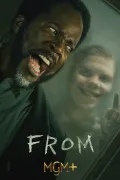
Review
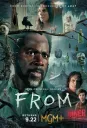
Few sophomore seasons arrive with the kind of narrative confidence that FROM: Season 2 displays from its opening stretch. The first sea...
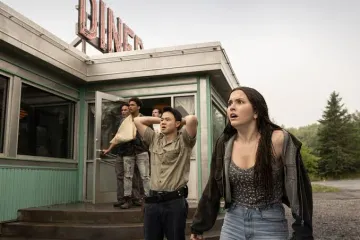
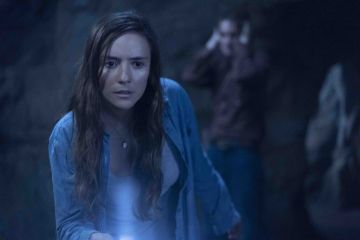
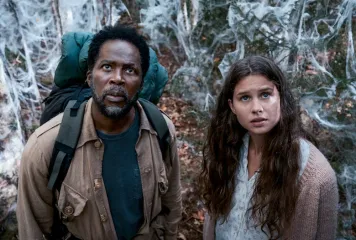
FROM Season 2 Review: Deeper Dread, Sharper Mysteries, and a Town That Refuses to Let Go
Few sophomore seasons arrive with the kind of narrative confidence that FROM: Season 2 displays from its opening stretch. The first season built a premise that felt like a dare: a town that traps anyone who enters, nights that bring monsters with a cruelly human smile, and a community forced to improvise civilization under permanent siege. Season 2 takes that high-concept panic and does the harder thing: it deepens the emotional architecture. It is no longer just about surviving the place. It is about what the place does to identity, family, faith, and the increasingly fragile idea that anyone here is still fully themselves.
As a reviewer, I often look for whether a genre series understands the difference between momentum and escalation. Plenty of shows know how to make things louder; fewer know how to make things stranger in a way that still feels earned. FROM: Season 2 does both. Its world expands in practical terms, but the series remains disciplined enough to keep the mystery intact. We learn more, yet never so much that the central dread is deflated. That balance is a major part of why the season works so well. It knows that answers are only satisfying when they create new and more unsettling questions.
What stands out immediately is the show’s patience. This season is not built like a conventional mystery box designed to pay off in tidy intervals. Instead, it leans into accumulation. Relationships strain, theories multiply, and the town itself seems to respond to human uncertainty with a kind of predatory intelligence. The result is a season that feels alive in the unnerving sense of the word. Scenes don’t just exist to move plot points forward; many of them function like pressure chambers, holding characters in place until fear, grief, suspicion, or unexpected tenderness comes bursting out.
The cast remains one of the strongest reasons to watch and stream the series. Harold Perrineau continues to anchor the ensemble with a performance that feels lived-in rather than performed. There is authority in the way he carries exhaustion, and the show wisely lets that exhaustion become part of the character’s texture. Around him, the ensemble benefits from writing that allows contradictions to coexist. People here can be frightened and stubborn, practical and spiritual, loving and selfish, sometimes within the same scene. That complexity matters because the town feeds on simplification. Anyone who becomes predictable is easier to break.
Season 2 also understands the value of domestic horror. The best genre stories often make the ordinary feel precarious, and FROM excels at this. A kitchen conversation can become more nerve-racking than a chase sequence if everyone in the room knows something is wrong but not what. A hallway, a basement, a window at dusk, a quiet stretch of road outside town boundaries: the show repeatedly turns spaces into emotional traps. The sets are not merely locations but instruments of tension. Even when nothing overtly supernatural is happening, the season maintains a low hum of menace that never fully disappears.
There is, however, a real skill in how Season 2 broadens its mythology without surrendering atmosphere. The danger with a series built on layered enigmas is that it can become self-admiring, marinating in its own secrets while the viewer waits for movement. That is not what happens here. Instead, the writers use each new revelation to reshape the rules of engagement. Folk belief, memory, trauma, and institutional authority all become part of the same unstable conversation. The town is not only a supernatural prison; it is also a mirror that reflects how people respond when certainty collapses. That thematic richness gives the season depth beyond its surface shocks.
The tonal range is also sharper than many viewers might expect. FROM has always been grim, but Season 2 permits moments of ridiculous human behavior, desperate humor, and emotional tenderness without undercutting the dread. In fact, those shifts make the dread more effective. When a series allows characters to joke, argue, mourn, and hope, the eventual return to terror cuts deeper. Life in the town feels populated rather than merely staged. We believe in these people, which is exactly why the season’s cruelties land with such force.
From a craft standpoint, the show remains visually assured. The cinematography frequently favors shadow, texture, and constrained perspective, creating the sense that the environment is watching back. Night sequences continue to be the series’ signature achievement: cruel, patient, and almost perversely beautiful. These are not action scenes in the usual sense. They are rituals of suspense, and the direction knows when to let silence do more damage than noise ever could. The editing also deserves credit for resisting overexplanation. Cuts arrive before the audience gets comfortable, which keeps the season feeling unstable in the best way.
If there is a criticism to make, it is one that comes with the territory. Viewers who want immediate clarity may find Season 2 frustrating at times, because it frequently asks the audience to live with uncertainty. Some threads advance slowly, and a few developments are designed more to reframe the puzzle than to solve it. But to my mind, that is a feature, not a flaw. The season is committed to a specific mood and method: dread first, explanation second. That decision may not satisfy everyone in the moment, yet it is precisely what gives the series staying power. It trusts the audience to stay curious.
Another virtue of the season is the way it treats faith and belief without flattening either into mere symbolism. In the hands of weaker writers, a setup like this becomes a debate between believers and skeptics, with one side vindicated by the plot. FROM does something more interesting. It shows that belief, in a place like this, is not simply about religion or superstition. It is about whether people can continue to imagine a future at all. Faith becomes practical, emotional, and moral. To believe is to keep going, and to keep going is often the most radical thing anyone can do here.
Season 2 also has the rare quality of making revelation feel dangerous. Every time the show opens a door, it suggests there may be something waiting behind it, but not necessarily in the way the characters expect. This is one of the reasons the series remains so compelling to stream on major platforms: it invites active viewing. Fans will pause, rewatch, and compare scenes, searching for patterns. Yet the show never becomes merely a scavenger hunt for clues. It has an atmosphere strong enough to survive scrutiny, and a dramatic pulse strong enough to reward it.
In the larger landscape of contemporary genre television, FROM occupies an interesting space. It is more psychologically uneasy than many supernatural thrillers and less interested in sleek mythology than shows built for easy viral theorizing. That makes it feel unfashionable in the best sense. It is not chasing trendiness. It is chasing unease, and doing so with confidence. Season 2 proves that the series has the endurance to sustain its premise without exhausting it. The town remains a nightmare, but the nightmare keeps evolving, and so do the people trapped inside it.
For viewers deciding whether to watch online, the answer is easy: if you admired the first season, Season 2 is essential. If you were merely intrigued, this installment may be what converts curiosity into commitment. It is not a clean, consoling experience, and it does not pretend otherwise. It is patient, moody, and emotionally bruising, but also unusually alive. That combination is hard to find. The show’s ambitions are bigger than simple scares, and its execution is steady enough to support them. This is the kind of season that lingers after the credits, not because it explains everything, but because it reminds you how little control people truly have when the world decides to become hostile.
How to watch FROM: Season 2 online
Availability & Access: FROM: Season 2 is typically available to stream on MGM+ through supported platforms, and availability may vary by region. It is not usually free on major services, though free trials or promotional access may appear from time to time. In many cases, viewers can download episodes for offline viewing through the app on supported devices, making it easier to watch on the go or in spots with limited access.
Age Rating (US-based): TV-MA, which is generally intended for mature audiences and is not recommended for younger viewers.
Netflix: Availability is not standard on Netflix in most regions, so check your local library. If it appears, download options may depend on the plan and device.
Amazon Prime Video: Episodes may be available to rent or purchase in some regions, and some users may access MGM+ through Amazon Channels. Offline access is usually supported through the app for purchased or subscribed content.
Apple TV: Often offers purchase or rent options in high quality, with download availability through the app for offline viewing on compatible devices.
Peacock: Not a typical home for this series, though availability can change. Peacock generally offers downloads only on eligible premium plans and devices.
Hulu: Usually not included by default. If made available through add-ons or partnerships, downloads are subject to Hulu’s device and plan limitations.
YouTube (Movies): In some cases, episodes or seasons may be available to rent or buy. Downloads are possible through the YouTube app for offline viewing on supported devices.
Pros:
- Season 2 deepens the mythology without losing the show’s unsettling atmosphere.
- The ensemble cast remains strong, with grounded performances that keep the story emotionally believable.
- Harold Perrineau continues to be a compelling emotional anchor for the series.
- The season balances supernatural dread with character-driven drama very effectively.
- The visuals and night sequences create a consistently tense, immersive horror mood.
- The writing expands the world in ways that feel earned rather than rushed.
- Faith, trauma, and survival are explored with more nuance than in many genre shows.
Cons:
- The season can feel slow for viewers who want quick answers and constant plot movement.
- Some mysteries are prolonged so long that impatience may set in.
- The heavy dependence on ambiguity may frustrate audiences who prefer clearer storytelling.



Movie Reviews

Fortnite
Minecraft

Grand Theft Auto V

Toca Boca World