Review
For decades, Ismael "El Mayo" Zambada García was a ghost. He co-founded the Sinaloa Cartel and outlasted rivals and partners alike, avo...

Power, Fear, and the Quiet Collapse of El Mayo
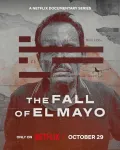
For decades, Ismael "El Mayo" Zambada García was a ghost. He co-founded the Sinaloa Cartel and outlasted rivals and partners alike, avoiding capture while far more famous names went to prison. Then, on July 25, 2024, he landed at a small airport in New Mexico on a private plane alongside Joaquín Guzmán López, a son of El Chapo. U.S. agents were waiting.
How that happened is still debated. The Fall of El Mayo, a three-part Netflix docuseries known in Spanish as La Caída de El Mayo, tries to untangle it. All three episodes premiered on October 29, 2026, and within two days it was the No. 1 series on Netflix in the U.S. Here's what it covers and whether it's worth your time.
The question at the center
Netflix's synopsis frames the series around one blunt question: "Was it a kidnapping, a betrayal, or a covert operation?"
Zambada later claimed that Guzmán López had kidnapped him and forced him onto the plane. Others have suggested a secret deal. The governments of Mexico and the U.S. have offered different accounts of what Washington knew in advance, according to Primetimer.
The series doesn't pretend to have the final answer. Primetimer noted that it lays out several possibilities "instead of presenting one explanation as the established truth." For a story this murky, that's a sensible approach.
Three episodes, one long story
Each episode runs about 59 minutes and is rated TV-MA. According to Rotten Tomatoes, the episodes are titled "The Man in the Hat" and "A Matter of Blood," with the finale simply called "Betrayal."
The first episode focuses on who El Mayo was and how he stayed hidden for so long. The second looks at the violence and family ties that held the cartel together, and sometimes tore it apart. The third deals with the arrest and its fallout, including the split that pitted his sons against El Chapo's.
That split matters. Primetimer reports that the conflict that followed brought "killings, disappearances, and displacement to communities across Sinaloa." The series keeps those consequences in view, which is important for a story that could easily turn into a crime thriller.
A man without a voice on record
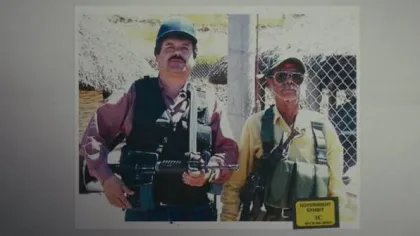
One fascinating detail is how little evidence of El Mayo existed. The directors pointed out that before his downfall, "there were only a few photos of El Mayo and not a single recording of his voice."
That makes him a hard subject for a documentary. The series fills the gap with court records and archival footage, plus a long list of interviews. Netflix says the filmmakers examined hundreds of court documents from Mexico and the U.S.
Decider's review notes that the series uses the cover of Proceso magazine, which ran one of the very few interviews El Mayo ever gave. A journalist reads from it on camera, offering a rare glimpse of how he saw himself.
Who speaks
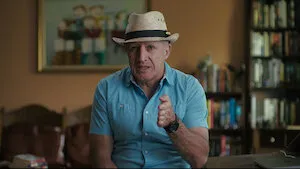
The interviewees come from both sides of the border. According to the directors, they include "security agents, politicians, and journalists, as well as people close to the cartel and to the families caught in the midst of it all."
Decider singles out Margarito Flores, who appears in silhouette. He and his twin brother, Pedro, moved cocaine for El Mayo before cooperating with U.S. authorities. Their testimony offers an inside view of how the organization worked.
El Mayo himself does not give a new interview, and neither do members of his family.
The team behind it
The series comes from Muck Media Productions, with Mariana van Zeller, host of Trafficked with Mariana van Zeller, and Darren Foster as executive producers. Netflix credits Foster, a Peabody and Emmy winner, and Miguel Fernández Flores, who has worked on VICE News Tonight, as directors.
Their background in investigative journalism shows. The series feels closer to a long news investigation than to a glossy true-crime show.
The directors also described the story in dramatic terms, calling it a tale of "an aging leader who managed to evade all his adversaries for half a century." They were also clear about who has paid the real price. The arrest's effects, they said, continue to fall on "countless innocent people caught in the midst of the latest chapter in a failed war on drugs."
What critics say
Early reviews are limited but positive. Joel Keller at Decider gave it a "Stream It" verdict. He wrote that the series "does an effective job of showing how Ismael "El Mayo" Zambada García ran Sinaloa from the shadows." He added that it "does a good job of showing exactly who El Mayo was, why he was even more ruthless than his partner in Sinaloa."
Neerja Choudhuri at Midgard Times gave it 8 out of 10. "What works best for The Fall of El Mayo is the three-episode format and investigation-style presentation," she wrote. She also appreciated that "there is a proper investigation that examines Zambada's rise and fall rather than following his reputation."
That last point is the most important one. Cartel documentaries often slip into treating their subjects as legends. Based on these reviews, this one mostly stays focused on facts and consequences.
Rotten Tomatoes didn't have a critic score at the time of writing.
What happened next
Viewers who want to know how the legal story ended can look beyond the series. In August 2025, Zambada pleaded guilty in a U.S. federal court in Brooklyn to drug-trafficking charges, admitting to decades of running the cartel. That plea closed one chapter, but it didn't settle the question of how he ended up in American custody.
A hit on Netflix
Men's Journal, citing FlixPatrol, reported that the series was the No. 1 show on Netflix in the U.S. on October 31, ahead of The One About Matthew Perry. A few days later, MovieWeb reported the two had swapped places.
Interest in the Sinaloa Cartel has stayed high since El Chapo's trial, and the mystery around El Mayo's arrest gives this series a strong hook.
Things to keep in mind
This is a story about real violence. Many people in Sinaloa have lived with the consequences of the cartel's power and the infighting after the arrest. The series includes disturbing material, and it's not meant to be watched as entertainment in the usual sense.
It's also a story still unfolding. Some questions the series raises have no confirmed answers yet, and viewers should treat competing theories as exactly that.
Should you watch it?
If you follow news about the drug war or U.S.-Mexico relations, this is a useful, well-organized overview. Three hours is enough to cover the key events without padding.
If you're looking for an action-packed crime story, this isn't it. The series is slow and careful, built on documents and testimony rather than shootouts.
I think its best quality is restraint. It treats El Mayo as a subject to investigate, not a character to admire.
I would watch it with the human cost in mind. The arrest may have looked like a clean ending, but for many families in Sinaloa, it was the start of something worse.
Pros:
- The film offers a restrained, intelligent approach to crime drama rather than relying on flashy violence.
- It avoids romanticizing cartel power and treats the subject with moral seriousness.
- The performances feel grounded, especially the lead, who conveys fatigue, caution, and authority well.
- The direction is patient and atmospheric, building tension through behavior and dialogue instead of constant action.
- The visual style is muted and effective, reinforcing the sense of decay and secrecy.
- The movie has thematic depth, especially in its focus on myth, control, and the fragility of power.
- It creates a convincing web of loyalty and self-interest among supporting characters.
- The tension often comes from small social details, which makes the world feel authentic.
Cons:
- The pacing may feel too slow for viewers expecting a more action-driven crime thriller.
- Some scenes prioritize mood over plot advancement, which can make the film feel uneven at times.
- The narrative stays cautious and restrained, so it may not fully satisfy viewers wanting broader scope or bigger dramatic swings.








Movie Reviews

Fortnite

Minecraft

Grand Theft Auto V

Toca Boca World