
Review
Most towns have one big employer. In Kingstown, Michigan, it's prison. There are seven of them within a few miles, and nearly everyone...
Navigating the Dark Corridors of Power: A Deep Dive into Mayor of Kingstown
Most towns have one big employer. In Kingstown, Michigan, it's prison. There are seven of them within a few miles, and nearly everyone in town either works inside one, has family locked up in one or makes money off the people coming and going. That's the setup for Mayor of Kingstown, the crime drama Taylor Sheridan created with Hugh Dillon for Paramount+ back in 2021. On October 5, 2026, the first four seasons, all 40 episodes, arrived on Netflix in the U.S. and most other regions. So if you've been hearing about it for years but never had Paramount+, now's your chance.
It's worth knowing what you're getting into before you start. This isn't Yellowstone with prisons. It's darker and angrier, and a lot more violent, and it doesn't care much whether you like anyone in it.
What the show is about
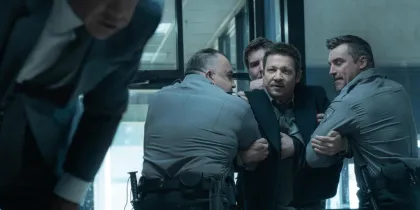
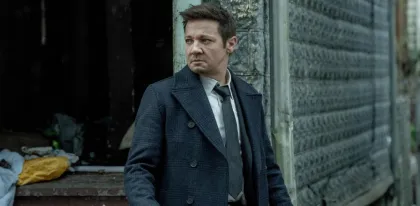
The title is a nickname, not a job. Nobody in Kingstown elected Mike McLusky, played by Jeremy Renner. He's the "mayor" because he's the man everyone calls when something has to get done between the people inside the prisons and the people outside them. Gang leaders, guards, cops, the warden, the district attorney: Mike knows all of them, and he keeps an uneasy peace by trading favors, making threats and occasionally breaking a few bones.
He didn't start out in that role. In the first season, the job belongs to his older brother Mitch, played by Kyle Chandler. Without giving too much away, Mitch doesn't hold the title for long, and Mike, who has spent years trying to stay out of the family business, ends up taking over. His younger brother Kyle, played by Taylor Handley, is a police detective, which puts the brothers on different sides of the law and in the same house for Sunday dinner.
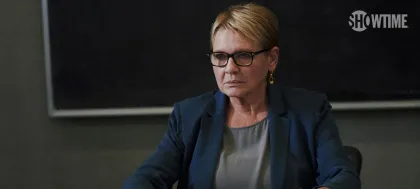
Their mother, Mariam, played by Dianne Wiest, is a college history professor. She hates what her sons do, and she isn't shy about saying it. Hugh Dillon, the show's co-creator, plays Ian Ferguson, a detective who works closely with Kyle. Tobi Bamtefa plays Bunny Washington, a gang leader who's one of Mike's most important and least predictable contacts. And Emma Laird plays Iris, a young woman caught up with the Russian mob, whose story runs through the first three seasons.
Four seasons, four kinds of trouble
Each season builds a new crisis on top of the old one, and the show never really lets the town calm down.
Season 1, which aired from November 2021 to January 2022, is about Mike learning that holding the town together costs more than he thought. It ends with a long, brutal prison riot that changes everything for the seasons that follow.
Season 2, from January to March 2023, deals with the fallout. The order that Mike kept so carefully is broken, and different groups start pushing to fill the gap.
Season 3, from June to August 2024, digs deeper into Kingstown's connection to organized crime. It's also where critics' scores started climbing, which suggests the show had found its footing.
Season 4, which aired from October to December 2025, brings in three big new faces. Edie Falco plays Nina Hobbs, the new prison warden, and she gives Mike a real opponent inside the system. Lennie James plays Frank Moses, a gangster from Detroit, and Laura Benanti plays Cindy Stephens, a rookie corrections officer who's in over her head from day one.
Jeremy Renner carries it
The show works because of Renner. He plays Mike as a man who's tired all the time, physically and morally, and who keeps going because stopping would be worse. He doesn't give big speeches. He listens, he nods, he says something short and then he does what he has to.
There's a real-world story behind his performance too. On New Year's Day 2023, about two weeks before Season 2 premiered, Renner was badly injured in a snowplow accident at his home. He came back for Season 3, and knowing what he went through adds a certain weight to watching him play a man who keeps getting knocked down and getting back up.
Dianne Wiest is the other standout in the early seasons. Her scenes with Renner, a mother who loves her son and can barely stand what he's become, are some of the best in the show. She was part of the main cast for the first two seasons.
And Edie Falco is a strong addition in Season 4. She's spent most of her career playing people who are tougher than they look, and Nina Hobbs fits right in.
How it compares to other Taylor Sheridan shows
If you've watched Yellowstone, Landman or Tulsa King, you'll recognize the style. There's a powerful man in the middle of a messy system, plenty of tough talk and a lot of characters who make bad choices for reasons that almost make sense.
But Mayor of Kingstown is grimmer than any of them. Yellowstone has big skies and horses. Tulsa King has jokes. Kingstown has gray winters and concrete walls, with very little sunshine. There's barely any humor, and when there is, it's dark.
The violence is also harder to watch. The show doesn't look away from what happens inside prisons, and some scenes are genuinely rough. If you're sensitive to brutal violence, especially sexual violence and violence against inmates, this is one to approach carefully.
The closest comparison might be The Wire, at least in its interest in how institutions trap everyone inside them, guards and prisoners alike. Mayor of Kingstown isn't as patient or as layered as that show, but it's asking some of the same questions.
What critics said
The show had a rough start with critics. On Rotten Tomatoes, Season 1 holds a 33% score from 27 reviews, and its Metacritic score is 54. Many reviewers found it too grim and too heavy-handed in its first run.
But the critics who stuck with it noticed it getting better. Season 2 sits at 50% on Rotten Tomatoes and 60 on Metacritic. Season 3 climbed to 78%, and Season 4 has a 100% score, though from only five reviews. That's a small sample, but the direction is clear: the later seasons are more confident than the early ones.
Where it was filmed
Kingstown isn't a real place, but the show's look is very real. The first season was filmed in Ontario, mostly at the former Kingston Penitentiary in Kingston, which gives the prison scenes a heavy, old-stone feeling you can't fake on a set. Later seasons moved to Pennsylvania, with filming around Erie for Season 2 and Pittsburgh from Season 3 on.
That shift is part of why the show feels like a Rust Belt story. The empty streets and old factories add to the sense that Kingstown is a town that ran out of options a long time ago.
What's next
Paramount renewed the show in January 2026 for a fifth and final season, which will be shorter, at eight episodes. David Morse is joining the cast, and production has started in Pittsburgh. There's no premiere date yet, and it's not clear when or whether the final season will come to Netflix. For now, Netflix has the first four.
Should you watch it?
If you like crime dramas that are dark and very violent, yes. Forty episodes is a lot to commit to. My advice is to treat the first season as setup, because the show gets better as it goes, and Season 3 and Season 4 are where it really comes together. If the first few episodes feel too bleak, it's worth knowing that the critics' scores rise season by season.
If you want something lighter from the Taylor Sheridan universe, Tulsa King is a better pick. And if you're sensitive to graphic violence, especially in prison settings, this might be one to skip.
I'll admit the first season is a hard sell. It's grim, it's loud and it takes a while to figure out who you're supposed to care about. But Renner's quiet, worn-down performance is reason enough to keep going, and the show rewards that patience. By the time Edie Falco walks into the warden's office, Mayor of Kingstown has become the show it was trying to be all along.
So I would start with Season 1, give it a few episodes and expect to feel a little heavier when you're done. Kingstown isn't a fun place to visit. But it's hard to look away once you're there.
Pros:
- Stellar performances from a talented cast that add depth to the characters.
- Technical mastery in cinematography and sound elevates the cinematic experience.
- Intricate character development that explores complex moral themes.
- Bold and unfiltered exploration of societal issues resonating with modern audiences.
- Thought-provoking dialogue that invites deep reflection on power dynamics and personal responsibility.
- Gripping narrative that challenges conventional storytelling.
Cons:
- The intricate narrative might require multiple viewings to fully grasp all the layers.
- Heavy thematic content could alienate audiences who prefer more straightforward storytelling.
- The film's unrelenting tone may be overwhelming for viewers seeking lighter entertainment.








Movie Reviews

Fortnite

Minecraft

Grand Theft Auto V

Toca Boca World